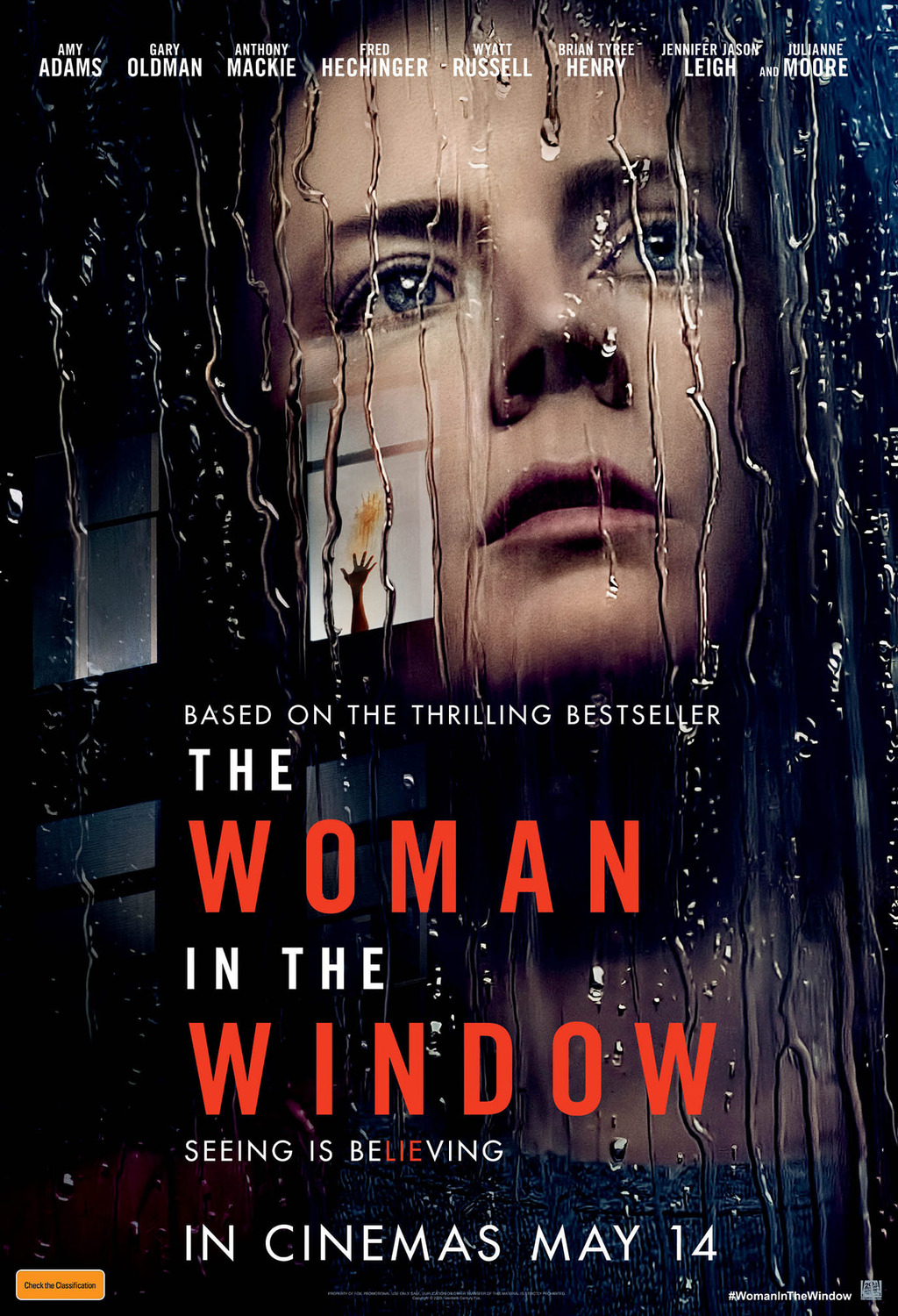
There’s something… refreshing about this movie, and I mean that in the worst way possible. Where other films usually take time for the flaws within to really present themselves, The Woman In The Window almost seems eager to get it all out in the open within the first five minutes. As Bruno Delbonnel’s camera work glides across the house of Amy Adams’ Anna, a child psychologist with agoraphobia, it lingers on a TV set playing a stuttering slideshow of Alfred Hitchcock’s Rear Window. With how much older cinema gets shown throughout, including a few more Hitchcock efforts, it gives this inexorable feeling that I’m watching the result of someone who’s been stuck inside for months with nothing but black-and-white flicks for company, and decided to write a screenplay because they need something, anything, to alleviate the cabin fever.
Of course, the actual genesis of this story is far more complicated than that, to the point where it could take up the bulk of this review all on its own (here’s a beat-by-beat breakdown of the author done by the New Yorker a couple years ago), but that impression still lingers regardless. Not that this is the first modern film to crib heavily from Rear Window, but this is a weirdly straight-forward example of such, as if it’s trying to pre-empt critics and general audiences pointing out such things. Then again, that ranks fairly low on my list of priorities with this particular flick. I am far less sceptical of a story being retold than I am of it being retold well. And to be brutally honest, this isn’t Rear Window. Or Disturbia. Or even Bart Of Darkness. This film wishes it could reach that level of genuine quality.